Linkedin scheduling
LinkedIn Post Scheduler: How to Schedule LinkedIn Posts in 2026
What LinkedIn's built-in scheduler can do, when a separate LinkedIn post scheduler is worth it, and where Wahlu fits for personal profiles.

Founder and CEO, Wahlu
· 8 min read
Updated

A LinkedIn post scheduler lets you write posts when you have time and publish them when your audience is around. LinkedIn has a built-in scheduler, and it's good enough for plenty of people. A separate tool earns its place when you're planning LinkedIn alongside other channels, want a calendar view of everything going out, or want your best evergreen posts to come back round without copying and pasting.
This guide covers what LinkedIn's own scheduler can and can't do, what to look for in a third-party tool, how a few popular options compare, and where Wahlu fits. The short version on Wahlu: it's built for people posting from a LinkedIn personal profile (founders, consultants, creators and small-business owners who are the face of their brand). It doesn't publish to LinkedIn company pages yet.
Can you schedule LinkedIn posts without a tool?
Yes. LinkedIn lets members schedule posts from their own profile on desktop and in the app. According to LinkedIn Help's scheduling article, you can schedule a post anywhere from 10 minutes to three months ahead, then view, reschedule, edit or delete it from your scheduled posts list. The time is set from your device's time zone.
A few things can't be scheduled natively from a profile. LinkedIn Help lists events, jobs and services posts as unschedulable; if you try, you'll need to post now or remove that post type.
LinkedIn Pages have their own rules. LinkedIn's Page scheduling help says Page super admins and content admins can schedule posts between one hour and three months ahead, but not events, multi-photo posts, reshares, polls, jobs or service posts.
So if you only post to one LinkedIn profile, a few times a week, the native scheduler may be all you need. It's free and you're already there.
When a LinkedIn post scheduler is worth it
A dedicated tool helps when one or more of these is true:
- You post to more than LinkedIn. If the same idea is going to Instagram, Facebook, TikTok or YouTube too, one calendar beats juggling several apps.
- You batch. Writing a fortnight of posts in one sitting is easier when you can see them laid out on a calendar and move them around.
- You have evergreen posts. Frameworks, FAQs and lessons that are still true in six months can go into a queue instead of being rescheduled by hand.
- You want an agent or script to help. Some tools, including Wahlu, let an AI agent or your own code create and schedule posts through an API.
If none of that applies, stick with LinkedIn's scheduler and spend the saved time on writing.
What makes a LinkedIn scheduling tool reliable
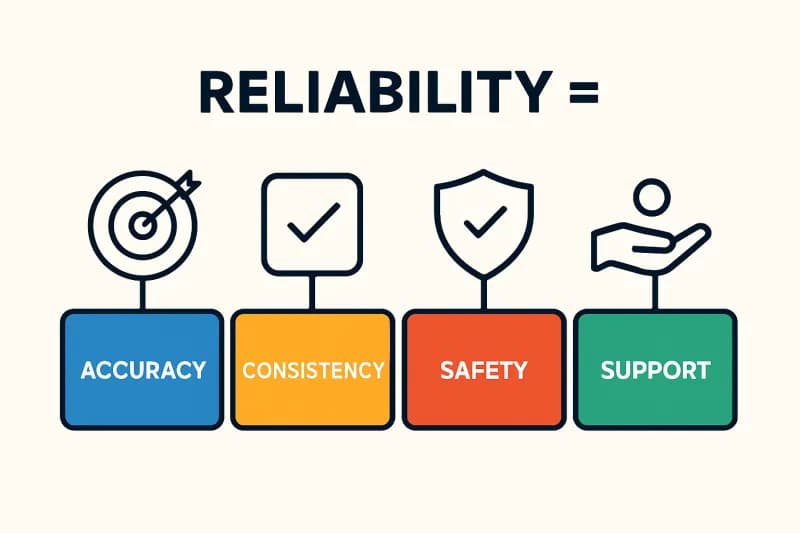
"Reliable" is really four things: accuracy, consistency, safety and support.
- Accuracy: posts go out at the right time with the right text, media and visibility.
- Consistency: the tool makes it easy to keep a rhythm you can sustain.
- Safety: publishing uses LinkedIn's official, approved APIs rather than browser automation.
- Support: when something fails, you're told clearly and can get help.
Safety deserves a closer look. LinkedIn's prohibited software and extensions page says it doesn't permit third-party bots, browser plug-ins or extensions that scrape or automate activity on its website, and that accounts using them risk being restricted or shut down. A scheduler that publishes through LinkedIn's official APIs is a different thing from a browser extension that clicks buttons for you. Before you connect any tool, check which one it is.
Checklist for choosing a LinkedIn post scheduler
- Official API publishing, not browser automation.
- The account type you need. Personal profile, company Page or both. This is where tools differ most.
- The post formats you actually use. Text, image, video, link, document carousel, poll. Check the tool supports each one for the account type you're posting to.
- A calendar view with time zone control so you can see gaps and move posts.
- Queues or recycling if you have evergreen content.
- Clear pricing. Per-channel pricing is cheap for one profile but adds up across many; per-brand or flat pricing can be the opposite. Check the tool's own pricing page.
LinkedIn post schedulers compared
Here's how a few common options handle LinkedIn. Details come from each company's own site, checked as of September 2026. Plans change, so confirm on their pricing page before you buy.
LinkedIn's built-in scheduler
- Accounts: personal profiles and Pages (Pages need an admin role).
- Good for: one profile, LinkedIn only.
- Limits: 10 minutes to three months ahead for members; one hour to three months for Pages. Some post types can't be scheduled (see above).
- Cost: free.
Buffer
- Accounts: Buffer's LinkedIn page says you can schedule to LinkedIn profiles and company Pages, including text, image, GIF, PDF, video, link preview and carousel posts.
- Pricing: Buffer's pricing page shows a free plan for up to 3 channels with 10 scheduled posts per channel, and Essentials at $5 a month per channel billed yearly ($60 a year), as of September 2026.
- Good for: people who want Page and document-carousel support and don't mind paying per channel. See how it compares in Wahlu vs Buffer.
Publer
- Accounts: Publer's pricing page lists LinkedIn profiles and Pages and says it supports LinkedIn PDF carousels.
- Pricing: a free plan with 3 social accounts and 10 scheduled posts per account; the Professional plan is shown from US$4 a month billed yearly, scaling with the number of social accounts, as of September 2026.
- Good for: budget-conscious users who need Pages. See Wahlu vs Publer.
Metricool
- Accounts: Metricool's pricing page says its free plan covers your brand's social networks except LinkedIn and X, so LinkedIn needs a paid plan.
- Pricing: Starter from $20 a month billed annually for up to 5 brands, as of September 2026.
- Good for: people who want analytics and reporting alongside scheduling. See Wahlu vs Metricool.
Wahlu
- Accounts: LinkedIn personal profiles, plus Instagram, Facebook, TikTok, YouTube, X, Bluesky, Telegram, Discord, Tumblr and Pinterest. LinkedIn company pages are coming soon.
- LinkedIn formats: text posts, single-image posts, video posts and link (article) posts, with Public or Connections-only visibility.
- Pricing: five plans billed monthly or annually. See current pricing.
- Good for: founders, creators and small teams who post from a personal profile and want LinkedIn in the same calendar as their other channels.
Who Wahlu fits, and who it doesn't yet
Wahlu currently supports personal profile scheduling on LinkedIn. That makes it a good fit if:
- You're a founder or consultant whose own profile is the main LinkedIn channel for the business.
- You're a creator posting the same ideas across LinkedIn, Instagram, TikTok and YouTube and want one calendar for all of it.
- You manage a handful of brands and want each brand's posts, queues and connected accounts kept separate.
- You'd like an AI agent to help. Every plan includes agent access through the Wahlu MCP server and REST API, so an AI agent connected through a custom MCP connection can create drafts and schedule posts for you.
It's not the right fit yet if:
- You need to publish to a LinkedIn company Page. Company Page scheduling is on Wahlu's roadmap, but it isn't available today. Until it is, LinkedIn's own Page scheduler works well for Page posts, and you can keep your personal-profile posts in Wahlu.
- You rely on document carousels, polls or multi-image posts. Wahlu publishes LinkedIn text, single-image, video and link posts.
- You need LinkedIn analytics inside your scheduler. Wahlu doesn't report LinkedIn analytics. LinkedIn's own post analytics show impressions, members reached, profile viewers and followers gained from each post, visible only to you.
How to schedule LinkedIn posts in Wahlu
1. Connect your LinkedIn personal profile
Add LinkedIn from your brand's connected accounts and sign in with LinkedIn to approve the connection. Wahlu publishes through LinkedIn's official API, so you're not handing over a password or installing a browser extension.
2. Draft and check the post
Write the post in Wahlu, or start with a first draft from the free LinkedIn post generator and edit it into your own voice. Before you schedule, paste it into the free social media post checker to check it against LinkedIn's character, hashtag and link limits and see a preview of where the text gets cut off. If you're adding an image, the LinkedIn image size guide has current dimensions.
On paid plans, Wahlu can also build a brand plan from your website and generate captions and images for you to review before anything is scheduled. See content automation for how that works.
3. Pick a time on the calendar
Choose a date and time, or drop the post into a queue with recurring posting slots. The scheduling calendar shows everything going out across your connected accounts, so you can spot gaps and move posts around.
4. Put evergreen posts in a queue
Frameworks, FAQs and lessons that stay true can go into a queue. Set the posting slots and time zone, then turn on looping if you want the queue to repeat. Review it every so often so nothing out of date comes back round. The evergreen queue guide walks through the setup.
5. Check the results in LinkedIn
After a post goes out, open it on LinkedIn and look at its analytics. The free LinkedIn engagement rate calculator shows the formula it uses, so you can compare posts the same way. Move posts that do well into your evergreen queue and rework the ones that don't.
Run a quick reliability test on any scheduler
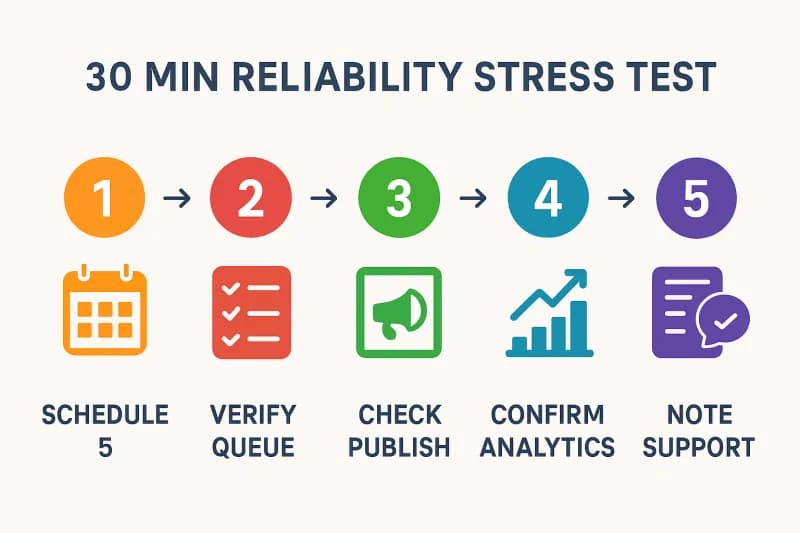
Before you commit a month of content to a new tool, test it with a handful of posts.
- Schedule five posts over the next 48 hours, covering each format you use (for example, text, image, video and link).
- Check the queue order, time zone and media previews before they go out.
- When each one publishes, confirm it went out on time with the right copy, media and visibility.
- Open each post's analytics on LinkedIn to confirm it's being seen.
- If anything fails, contact support and note how quickly and clearly they answer.
Example LinkedIn posting rhythms
These are starting points, not rules. The best cadence is one you can keep for months. Adjust based on what your own post analytics show.
Solo creator: three posts a week
- Monday: an insight post that teaches one idea.
- Wednesday: a short story (the problem, what changed, what you learned).
- Friday: a soft call to action (a free resource, your newsletter or an invitation to get in touch).
Founder or consultant: short updates plus a weekly round-up
- Monday to Thursday: short updates on a market view, a client lesson or a common objection.
- Friday: a longer post or video that pulls the week's theme together.
Cross-posting creator: one idea, several channels
- Write the LinkedIn version first, where the text carries the idea.
- Cut a short video version for Instagram Reels, TikTok and YouTube Shorts.
- Schedule all of them from one calendar so the idea lands on each channel in the same week.
Automate the timing, not the relationships
Scheduling is about timing and consistency. Keep the conversation human: reply to comments yourself, and don't use tools that auto-message, auto-connect or auto-comment. LinkedIn's rules on prohibited automation specifically cover bots that send messages or create, comment on, like or share posts.
A few habits that help:
- Variety: mix text, images, video and the occasional link.
- Value first: teach something, show your work or tell a story before you pitch.
- Accessibility: write plainly and describe images where you can.
FAQs about scheduling LinkedIn posts
How far in advance can you schedule a LinkedIn post?
Natively, members can schedule from 10 minutes to three months ahead, and LinkedIn Pages from one hour to three months ahead, according to LinkedIn Help. Third-party tools set their own limits.
Does scheduling LinkedIn posts hurt reach?
There's no official LinkedIn statement saying scheduled posts are penalised, and LinkedIn offers scheduling itself. What matters more is whether the post is relevant to the people who see it and whether you're around to reply to comments after it goes out.
Can I schedule carousels and polls?
LinkedIn's native Page scheduler doesn't support polls or multi-photo posts. Some third-party tools, such as Buffer and Publer, say they support PDF or document carousels. Wahlu publishes text, single-image, video and link posts to personal profiles, so it isn't the right tool for carousels or polls today.
Can I schedule to LinkedIn company Pages with Wahlu?
Not yet. Wahlu currently supports personal profile scheduling. Company Page scheduling is on Wahlu's roadmap and marked as coming soon. Until then, use LinkedIn's own Page scheduler for Page posts.
Can I schedule LinkedIn posts alongside other platforms?
Yes. Wahlu schedules LinkedIn personal profile posts alongside Instagram, Facebook, TikTok, YouTube, X, Bluesky, Telegram, Discord, Tumblr and Pinterest from one calendar, and each post can have its own caption per platform.
Start scheduling LinkedIn posts
If you post from a LinkedIn personal profile and want LinkedIn in the same calendar as the rest of your channels, Wahlu is built for that. If you mainly need company Pages or document carousels today, one of the tools above will serve you better for now.
See Wahlu's plans, or read more about who makes Wahlu.